A salt system changes how chlorine is supplied. Water testing, cleaning, filter care, and attention to the cell still belong on your maintenance list.
Understand what the salt system actually does
The cell produces chlorine as part of a properly operating circulation system. It does not remove leaves, brush steps, or replace the filter. Pentair's IntelliChlor product information describes this chlorine-generation function; the salt system is one part of the pool, not the whole care routine.
When you inherit a saltwater pool, ask for the cell model, installation history, and owner's manual. Keep those with the pool records. A familiar brand name alone is not enough to select settings or a replacement component.
Treat the output setting and water test as different information
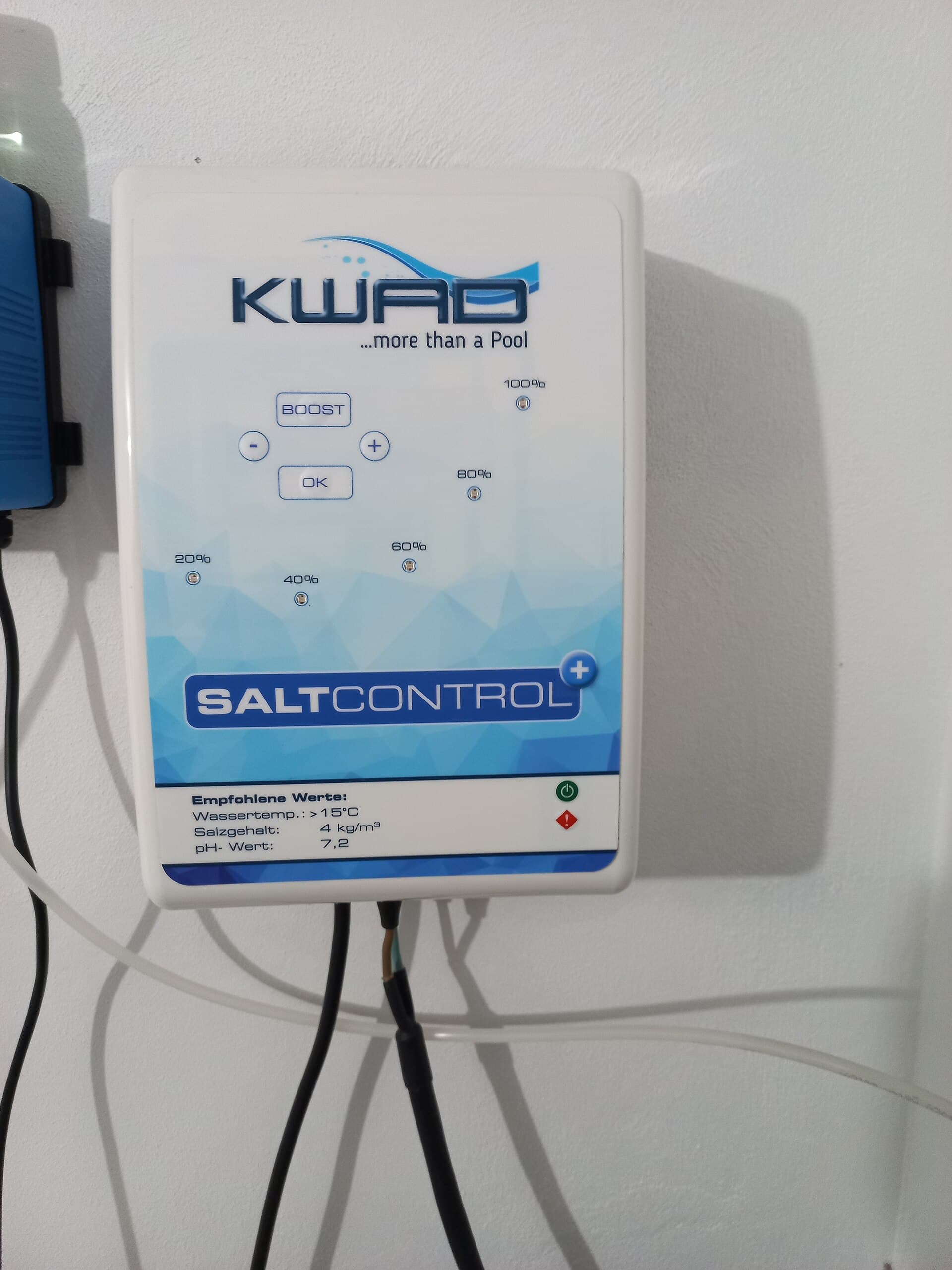
An output percentage tells you about a control setting; it is not a measurement of chlorine in the pool. Record actual water-test results separately from the setting and circulation schedule. That makes it easier to discuss what changed after heavier swimming activity or a schedule adjustment.
Ask your provider to define the complete testing plan, including pH, alkalinity, stabilizer, calcium hardness, and salt as appropriate for your equipment and finish. Avoid copying a neighbor's target salt level: use the manual for the exact installed model.
Check salt before adding another bag
Salt does not evaporate with the water. A falling water level alone is therefore not a reason to add salt. Water replacement, splash-out, or a leak creates a different situation from evaporation. Verify the current salt concentration and the manufacturer's target before deciding whether an addition is needed.
Keep a note of recent refilling, backwashing, or other water loss when you send test results to your service provider. That context is more useful than a picture of the salt bag.
Put cell inspection and surrounding materials on the plan
Inspecting a cell and cleaning it are different tasks. For example, Jandy TruClear has a transparent inspection window. A maintenance plan should identify how the installed model is checked, what findings require attention, and who will service it.
Also ask how the coping, stone, metal fixtures, and surrounding surfaces should be cared for with your salt system. Keep their care instructions alongside the equipment manual rather than assuming one cleaning product suits everything.
Source: Jandy: TruClear features and model-specific manuals.
Make seasonal changes visible
For a Rancho Mirage or Indian Wells home, leave a handoff note before a long absence: current settings, last test date, any alerts, and the next planned visit. Tell the service team before a busy guest weekend so changes in pool use are part of the discussion.
Request a saltwater pool care review with JB Pools by sharing your city and cell model. We can discuss routine water care and equipment checks; any additional work and availability are confirmed separately.
Common questions
Does a saltwater pool still need chlorine testing?
Yes. The generator makes chlorine, and the water must still be tested. An output setting or salt reading does not tell you the measured free chlorine level.
Should I add salt whenever I refill the pool?
Test first. Topping up evaporation is different from replacing water that carried dissolved salt out of the pool. Follow your exact generator's salt requirements.
Ready for the next step?