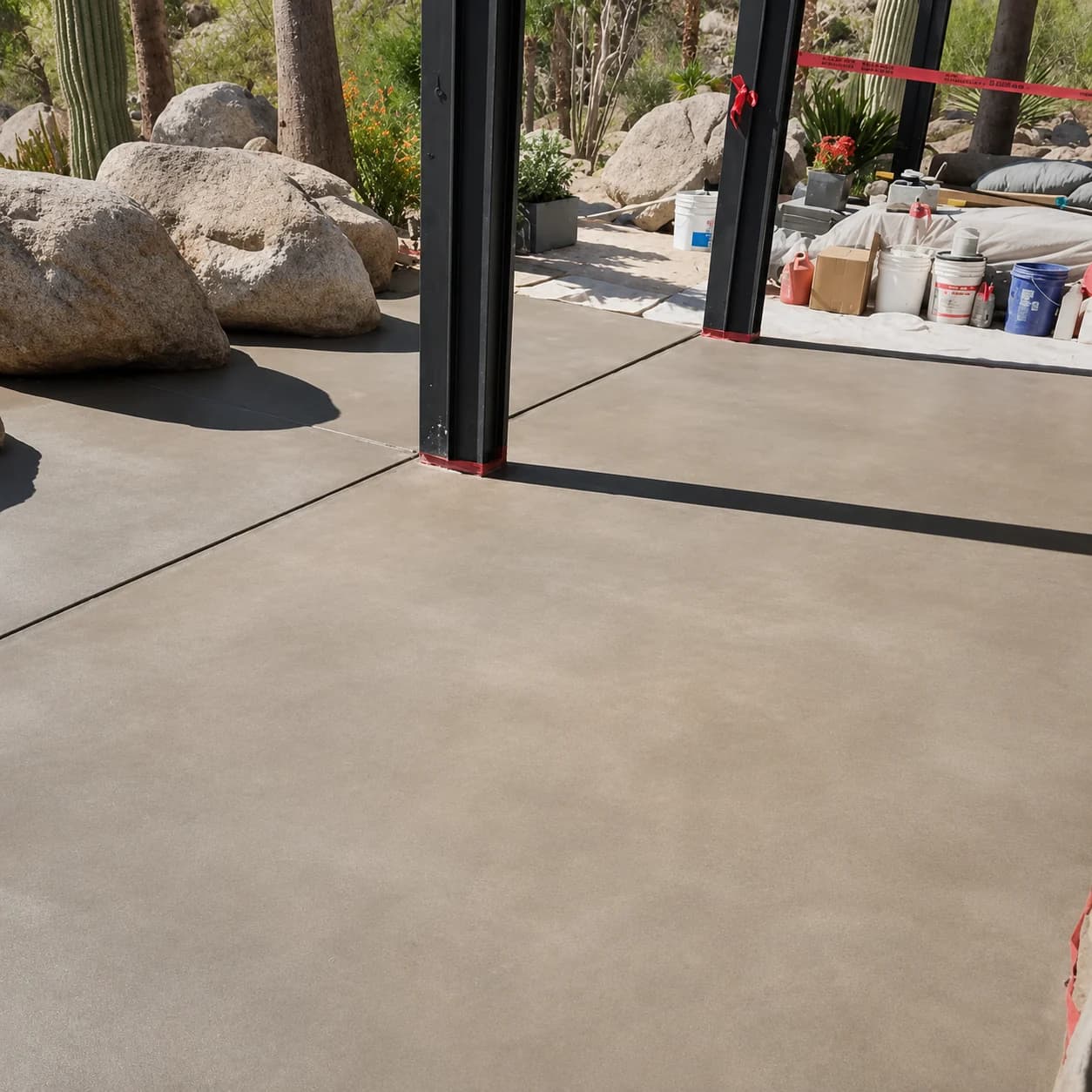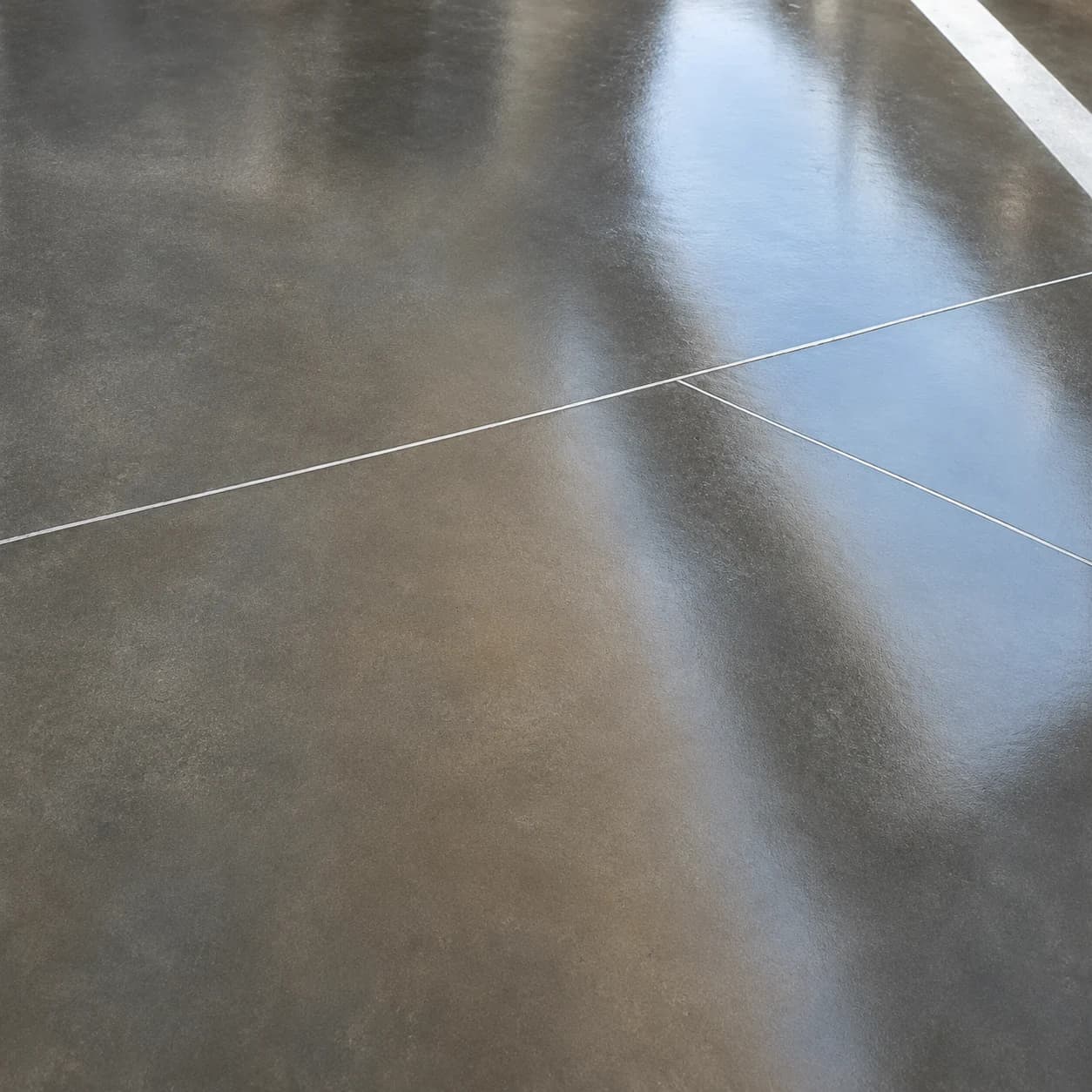
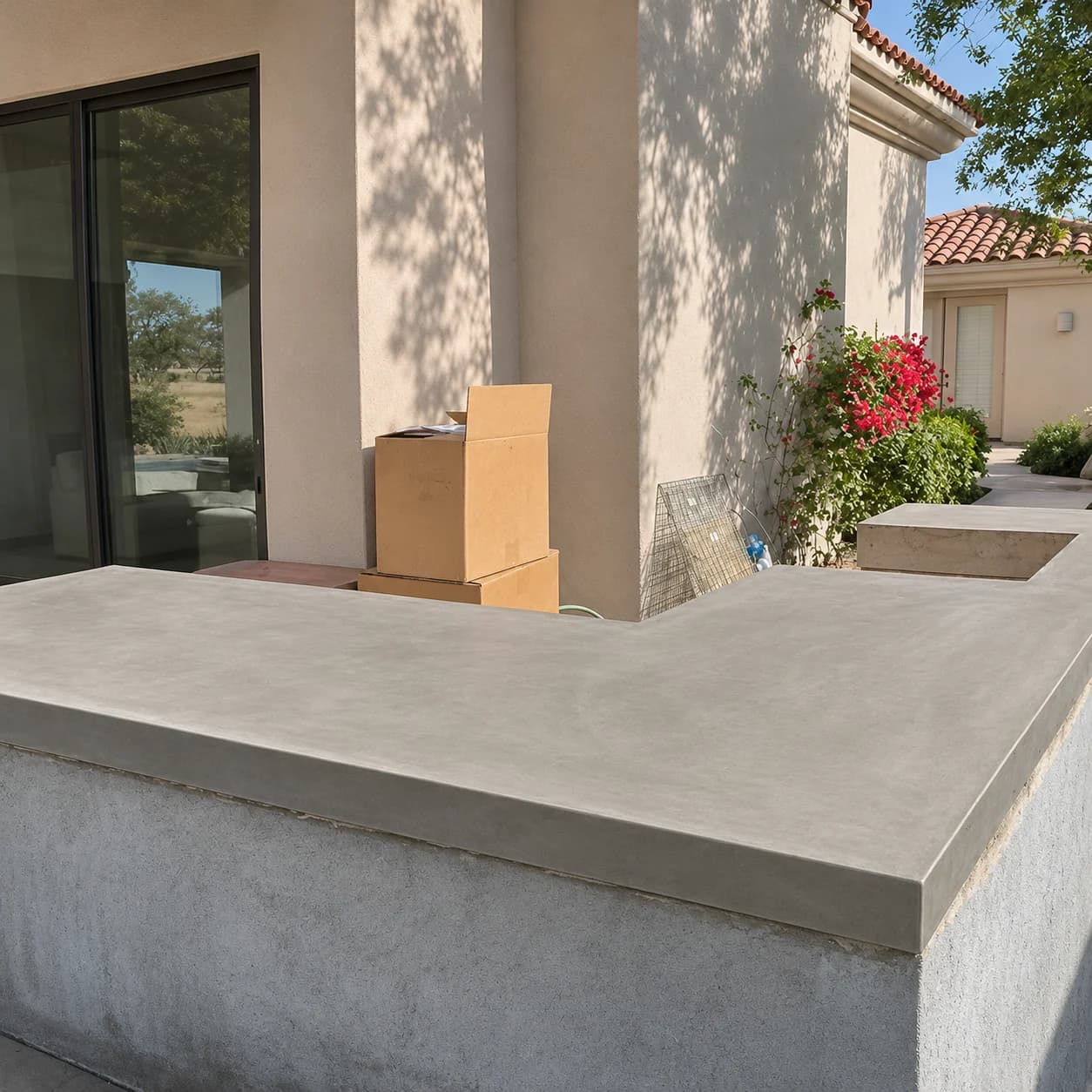
A pool deck should be considered in sun, shade and daily use. Compare color, texture and coating options without relying on a photograph or a cooling promise.
Start with the routes people actually use
Look beyond the open area in a pool photograph. Trace the walk from the back door to the pool steps, the spa and the shaded seating. Note which parts receive direct afternoon sun and which stay sheltered. This simple map helps explain where comfort matters most in your own backyard.
For a La Quinta home used throughout the summer, that route may be different from the entertaining pattern at a seasonal Indian Wells property. Describe when the space is used, who uses it and where you would like more shade. Material selection is more useful when connected to those details.
Ask what a heat-reflective product claims
Americrete describes A-1150 Cool Pool as a pigmented acrylic coating formulated to reflect infrared energy, with pool decks among its listed uses. That identifies a product category to discuss; it does not establish a temperature reduction for your particular deck.
Ask the installer for the current technical information, available colors and suitability for the existing surface. Do not treat a product name as permission to walk barefoot on a hot deck. Sun exposure and actual site conditions still need attention, and shade remains a separate part of the backyard plan.
View color as part of the entire composition
Bring a sample alongside the pool coping, waterline tile, house color and landscape materials. View it from the patio door as well as at ground level. A very pale finish may create a different visual effect from a warmer neutral, even when both appear understated on a small color card.
Review the sample during more than one part of the day when practical. Ask whether it includes the intended texture and topcoat. Keep a labeled sample or clear record of the approved selection so a later conversation is about the same finish, rather than different screen images.
Give texture and wet-use conditions their own discussion
A finish that looks smooth and refined in a dry photograph does not tell you how the completed deck will perform around splashing water. Ask how the selected system addresses poolside use, which texture will be installed and what cleaning it needs. No deck should be presented as slip-proof.
Also mention children, mobility needs and the way furniture is moved. The point is to give the specialist a complete picture of use, not to select the roughest possible surface by default. Ask to evaluate a representative sample and confirm the final finish in the proposal.
- Pool entries and frequently wet walking routes
- Texture and sealer as one finished system
- Sun exposure and planned shade
- Cleaning requirements and long-term appearance
Keep the final decision specific
A good selection record names the product system, color, texture and areas receiving it. It also identifies any adjacent surfaces that remain. This is particularly helpful when a deck refresh is one phase of a larger pool remodel or outdoor-living project.
Share your priorities with JB Pools and bring photos of the existing deck at the times you use it most. We can discuss a concrete finish consultation and coordinate the next step. Suitability, scope and availability are confirmed before work is scheduled.
Common questions
Will a heat-reflective coating make my deck cool all day?
No universal temperature result should be assumed. Review the exact product, color and conditions with the installer, and continue to check the surface before barefoot use.
Can I choose texture from a photo?
A photograph is a starting point. Ask for a representative sample of the texture and sealer together and discuss the actual wet-use conditions.
Reference: Americrete: A-1150 heat-reflective deck coating.
Ready for the next step?